
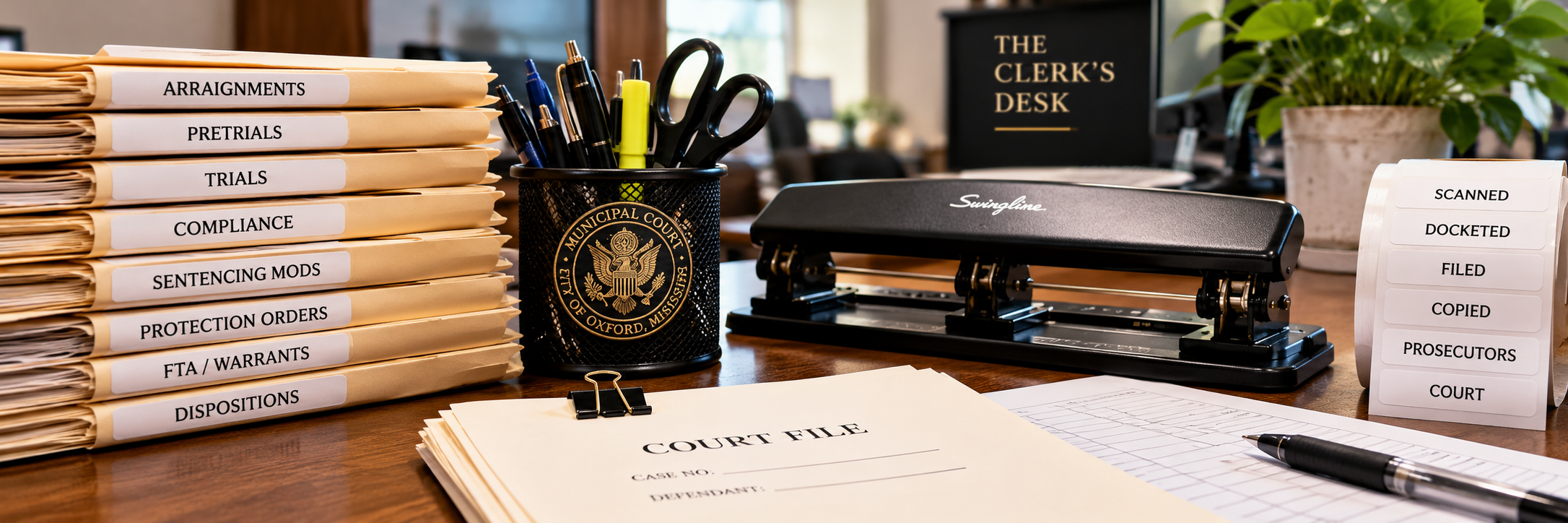
A document is not considered properly docketed simply because it has been received or scanned. Proper docketing involves several steps that ensure the document can be easily identified, located, and understood by anyone who may need to access the case in the future.
To be properly docketed, a document should:
1. Be file-stamped to show the date it was officially received and filed by the court.
2. Be scanned into the court’s case management or docketing system so an electronic copy is preserved.
3. Be labeled correctly using a clear and accurate document description. Proper labeling makes it easy for court staff, attorneys, judges, and future users to quickly locate the document.
4. Include a meaningful docket entry that explains what the document is and, when appropriate, why it was filed. The goal is to provide enough information that someone reviewing the docket can understand the significance of the filing without having to open every document.
5. Be placed in the physical court file after all electronic processing is complete.
When all of these steps have been completed, the document is properly docketed and becomes part of the official court record.
Why It Matters
Accurate docketing promotes organization, transparency, and efficiency. A well-maintained docket allows anyone reviewing a case to quickly understand what has occurred, locate important documents, and follow the history of the case without confusion.
Leave a Reply