People see court day.
They see the judge on the bench, attorneys at the tables, defendants waiting, and cases moving through the docket.
What they don’t see is everything that happens before that.
Court doesn’t run on its own.
It Starts Long Before Court Day
In our office, we start preparing for the next court session almost immediately after the previous one ends.
We have a full checklist that our team works through, and each deputy clerk has specific responsibilities. It’s not just one person getting ready—it’s a coordinated effort.
By the time Wednesday court comes around, most of the work has already been done.
The Checklist (Big Things and Small Things)
Some of our weekly preparation includes:
- pulling all case files
- double-checking files against the docket
- entering docket notes for the clerk, prosecutor, and judge
- preparing the iPad check-in system and docket list
- making sure everyone has updated copies of the docket
- coordinating with law enforcement for transports
- ensuring cash drawers are ready with change
But it also includes things people might overlook:
- restocking orders and documents in the courtroom
- setting up supplies for public defenders
- refilling the prosecutor’s workspace
- making sure everyone has working pens
- charging laptops
- checking courtroom equipment (including TVs and displays)
- tidying the office and kitchen
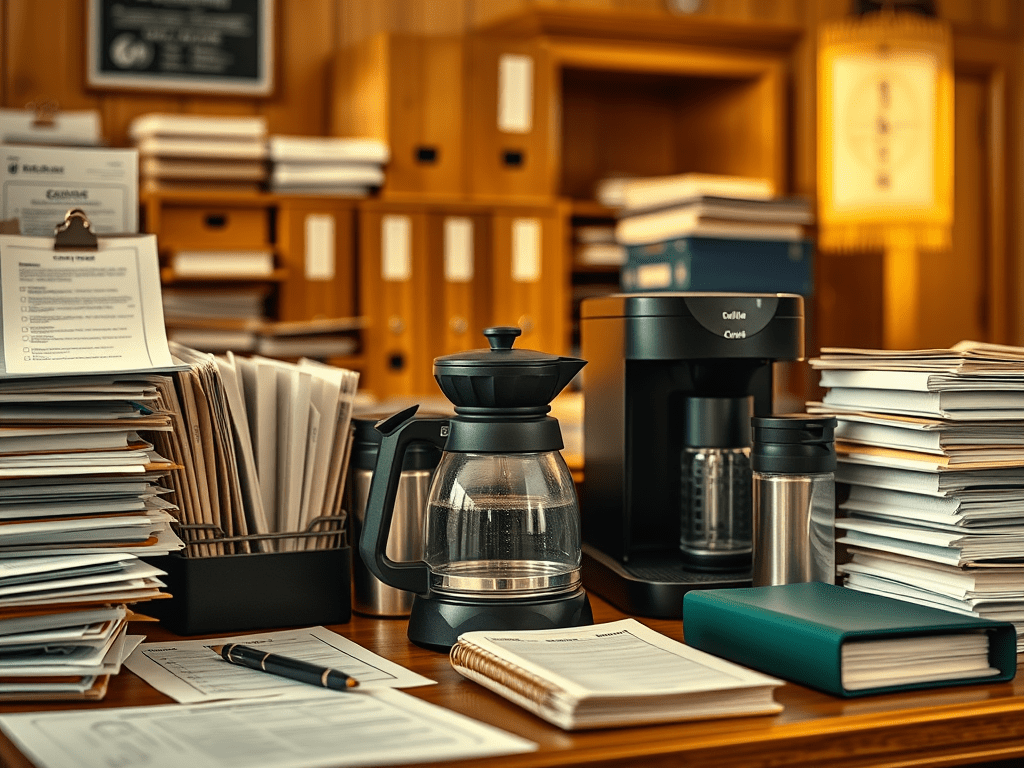
- making sure water and coffee are ready
Do the Small Things Really Matter?
No, court is not going to fall apart because a pen doesn’t work.
No, court is not going to shut down because someone forgot to refill a stack of forms.
And no, court is not going to end because the coffee wasn’t made.
But here’s the truth:
Those small things matter more than people think.
Because when they’re not done, they create friction.
They slow people down.
They distract from the real work.
They create unnecessary stress.
The Coffee Story (Because It Matters)
I’ll give you an example.
One time, we had a very small docket coming up. Hardly any attorneys, barely any cases. None of the clerks at the time even drank coffee.
So I made half a pot.
That turned into a whole situation when the bailiff got there and decided that was not enough coffee for the day.
Now, technically, that shouldn’t matter.
But in reality?
It mattered to him.
Which meant it became my problem.
And that’s the point.
People get used to things being where they need them, when they need them.
Why We Do It This Way
Over time, we’ve learned—week by week—what needs to be done to keep court running smoothly.
Not because it’s written in a rule book.
But because we’ve lived it.
We’ve seen what happens when things are missed.
We’ve felt what it’s like when everything starts stacking up at once.
And we’ve learned that preparation on the front end prevents chaos on the back end.
What Good Prep Actually Does
All of this work:
- reduces confusion
- keeps things moving
- supports the judge and attorneys
- helps your staff stay organized
- prevents last-minute scrambling
And most importantly:
It keeps you from feeling like everything is falling apart internally—even when everything looks fine on the outside.
Because let’s be honest…
There are moments in this job where everything feels like it’s about to go off the rails.
And the goal is to make sure no one else can tell.
Final Thought
Court day is not the hard part.
Preparation is.
But when you take the time to build a system, assign responsibilities, and pay attention to the details—even the small ones—you set your court up for success.
Because court may not fall apart without those things.
But it definitely runs better with them.
 The Clerk’s Desk
Leave a comment