Artificial intelligence has received a great deal of attention in the legal community over the past few years. Much of that attention has focused on situations where attorneys relied on AI-generated legal research that contained inaccurate information, sometimes even citing court cases that did not exist. These incidents have raised concerns about how AI tools should be used in legal and court-related work.
One widely reported example involved the federal case Mata v. Avianca, Inc., where attorneys submitted a legal brief containing citations to several cases that did not exist. The citations had been generated by an AI tool and were not verified before being filed with the court. The attorneys were later sanctioned by the court.
Situations like this highlight an important point: artificial intelligence should never be relied upon to produce legal research or legal conclusions without careful verification.
However, those examples do not tell the entire story. Like many tools used in a modern office, artificial intelligence can also serve practical administrative purposes when used thoughtfully and responsibly.
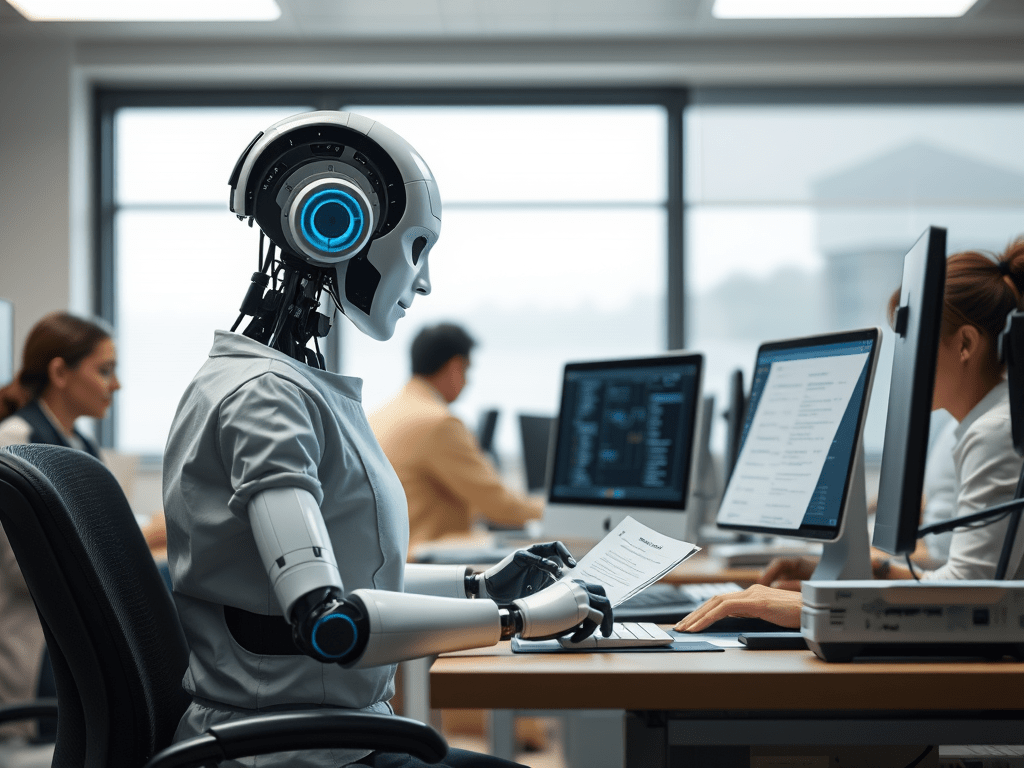
In a clerk’s office, AI should never replace legal judgment or official court procedures. Instead, it can function as an organizational and drafting tool that helps clerks manage routine administrative tasks.
Responsible Use of AI in a Clerk’s Office
When using AI tools in a court environment, it is important to maintain clear boundaries.
Artificial intelligence should never be used to:
- make legal determinations
- replace the judgment of the court
- generate legal research without independent verification
- produce documents that are filed without review
The responsibility for any document issued by the court always remains with the court and the clerk’s office.
When used appropriately, however, AI can assist with administrative work such as organizing information, drafting document layouts, and outlining procedures.
Practical Ways Clerks Can Use AI
While artificial intelligence should not replace the professional judgment of the clerk or the court, it can be helpful for a number of routine administrative tasks.
Drafting Uncommon Orders
Occasionally the court may need an order that does not exist in the court’s standard forms.
For example, a judge may require a custom order that outlines specific conditions such as:
- adding a defendant to GPS monitoring with detailed supervision requirements
- modifying existing bond conditions when no standard template exists in the court’s forms
In these situations, AI can help generate a basic document layout that the clerk can then review, edit, and format according to the court’s procedures before it is presented to the judge.
The key point is that the clerk remains responsible for reviewing and finalizing the document.
Generating Office Checklists
Clerk’s offices manage many moving parts during a court week. AI can be helpful when generating quick outlines or checklists for tasks such as:
- preparing the docket
- reviewing case files prior to court
- courtroom preparation before a session
- ensuring required documents are available for hearings
These checklists can also be useful training tools for new staff members.
Organizing Daily Task Lists
Clerks often manage a wide range of responsibilities throughout the day. AI can help organize:
- daily to-do lists
- follow-up reminders
- priorities for the next court session
This type of organization can be especially helpful during busy court weeks.
Planning Office Projects
Artificial intelligence can also assist with outlining ideas for office administration projects such as:
- planning office cleanup or organization days
- reviewing and improving filing systems
- brainstorming workflow improvements
- outlining ideas for staff training
While the clerk ultimately determines what procedures work best, AI can help organize these ideas into a workable plan.
Training and Documentation
AI can also help clerks outline training notes or draft procedure guides for internal use.
Examples might include:
- step-by-step workflow notes
- training outlines for new deputy clerks
- drafts of internal procedure guides
These drafts can then be refined and customized to match the specific practices of the court.
Capturing Ideas and Clearing Your Mind
Sometimes the most helpful use of a tool is simply having a place to record ideas.
At the end of a busy day, many clerks find it useful to quickly capture a list of tasks, reminders, or ideas that need attention. Writing those thoughts down in one place can help clear your mind and allow you to begin the next day with a clearer plan.
A Tool That Still Requires Judgment
Artificial intelligence is not a substitute for the experience and judgment required in a clerk’s office. Every document, order, and procedure still requires review and oversight by the clerk and the court as well as the judge who will be signing off on the order.
However, when used responsibly as an administrative tool, AI can assist with drafting, organization, and planning.
Like any office tool—whether it is a checklist, a spreadsheet, or a word processor—its usefulness depends entirely on how it is used.
Final Thoughts
Technology will continue to evolve, and courts will continue to adapt to new tools. While there are legitimate concerns about the misuse of artificial intelligence, there are also practical ways it can assist with administrative work in a clerk’s office.
Used responsibly, AI can serve as another tool that helps clerks organize their work, develop procedures, and manage the many responsibilities that come with running a busy court office.
The goal is not to replace the work of clerks, but to support it.
 The Clerk’s Desk
Leave a comment